
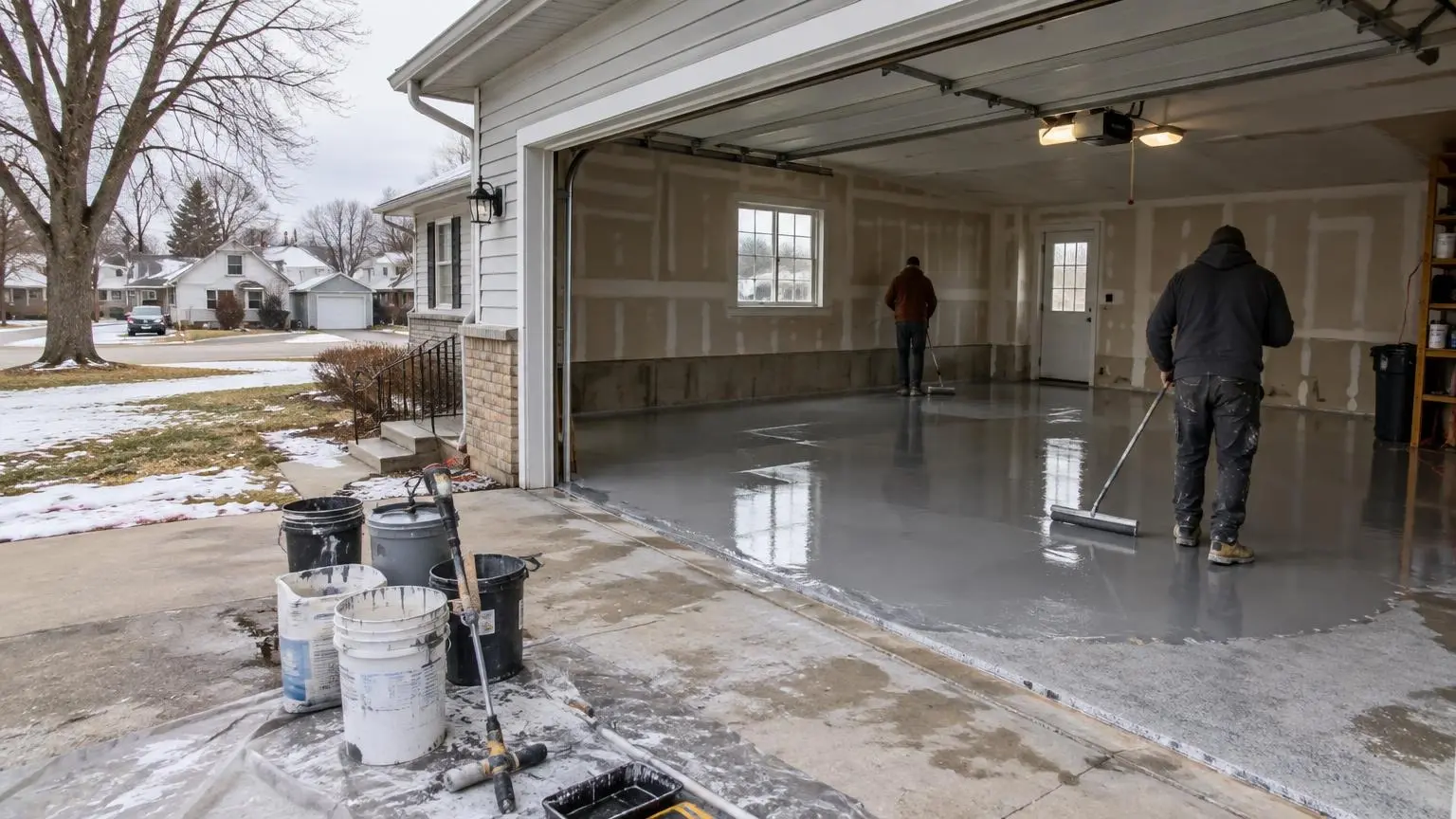
Shops, sheds, bays and warehouses
Shop & Commercial Floor Epoxy in Waterloo, IA
Thick, chemical-resistant floors for concrete that carries equipment, fluids and daily traffic.
- Free on-site estimates with a slab moisture check
- Itemized written quote before any grinding starts
- Every floor diamond ground and patched before it is coated
Work Floors for a Factory and Farm Region
Shop and commercial floor epoxy covers concrete that works for a living. The Cedar Valley has a lot of it. Waterloo's economy is built on agricultural manufacturing, healthcare, meatpacking and education. Grow Cedar Valley's 2025 employer counts, cited on Wikipedia, list John Deere at 4,300 employees and Tyson Foods at 2,969. Around those employers are machine shops, truck and tractor service bays, supply businesses, and farm shops in the countryside around every town we serve.
What a shop floor faces
- Hydraulic fluid, diesel, oil and coolant that soak into bare concrete
- Rolling loads from jacks, carts, skid steers and forklifts
- Dropped tools and parts that chip thin coatings
- Salt and mud tracked in by trucks and equipment all winter
- Wash-downs that leave standing water
Thicker systems for heavier use
Garage-grade coatings are too thin for most work floors. Commercial and shop floors usually get 100% solids epoxy, which has no water or solvent to evaporate, so what goes down stays on the floor as a thick film. HomeAdvisor puts industrial jobs that need 100% solids coatings at $12 or more per square foot and says higher-grade coatings for heavy traffic add 20% to 30% to the cost. Where chemical or hot-tire resistance matters, we finish with a urethane or polyaspartic topcoat.
Machine sheds and farm shops
Many shop floors around Waterloo are in pole buildings and machine sheds outside town. Those slabs are often large, may not have a vapor barrier under them, and can have big overhead doors that let in cold air and snow. We test for moisture, look at how the floor drains, and plan the coating so wet areas near the doors have extra texture. Large open slabs can be coated in sections so part of the building stays in use.
Commercial interiors
Retail spaces, offices, salons, clinics and dealerships want a clean, bright floor that is easy to mop. Flake and solid-color systems with a clear topcoat handle that. For food-handling or wash-down areas, the system has to match the cleaning chemicals and temperatures used, and we work from the product data sheets to choose it.
Scheduling around your work
Downtime costs money in a working shop. We plan the job around your schedule, which can mean coating one bay at a time or working over a weekend. Fast-cure topcoats shorten the time before equipment can roll back in. We put the schedule in writing with the quote.
Prep for contaminated slabs
Oil that has soaked into concrete for years keeps coming back to the surface and will lift a coating. We degrease, grind, and in bad spots cut out or treat the contaminated concrete before coating. If a slab has been sealed or painted, it gets ground clean.
What This Covers
Work floors get a system matched to the load, the chemicals and the schedule.
100% solids epoxy systems
Thick, high-build coatings for rolling loads, dropped tools and fluids.
Oil-soaked slab prep
Degreasing, grinding and treatment of contaminated concrete before coating.
Texture and drainage
Anti-slip aggregate at doors and wash areas, with the coating carried to floor drains.
Line striping and zones
Painted safety lanes, parking stalls and work zones on request.
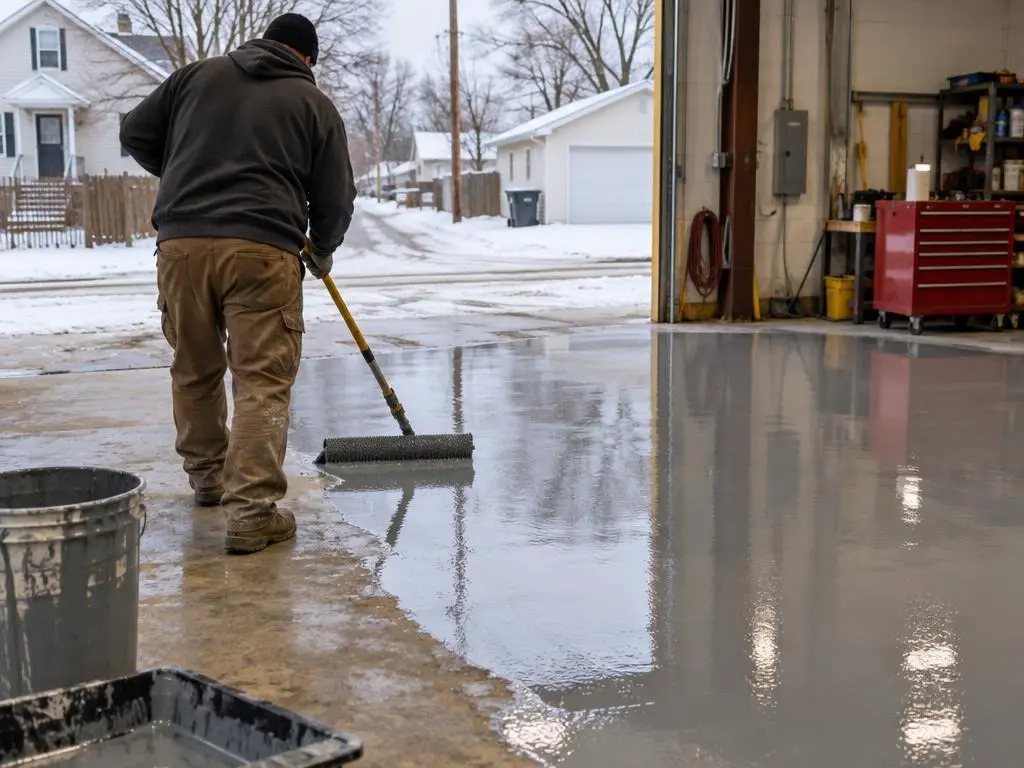
Typical Shop & Commercial Floor Costs
| Item | Published range |
|---|---|
| Installed epoxy, per square foot (general) | $4 to $10 |
| Industrial 100% solids coatings | $12+ per sq ft |
| Higher-grade coating for heavy traffic | adds 20% to 30% |
| Contractor labor, hourly | $50 to $150 per hour |
| Crack and chip patching | $25 to $250 |
National ranges from HomeGuide (general epoxy) and HomeAdvisor (industrial coatings, labor and patching). Commercial and shop jobs vary widely with size, slab condition, chemicals and scheduling. Your written estimate is the price.
How It Works
1. Walk the space
We look at the slab, the equipment, the chemicals used and how water drains.
2. Plan the schedule
The job is phased around your operations and written into the quote.
3. Prep and repair
Degreasing, grinding and repair of cracks, joints and damaged concrete.
4. Coat and return to service
High-build coats and topcoat, with written times for foot traffic and equipment.
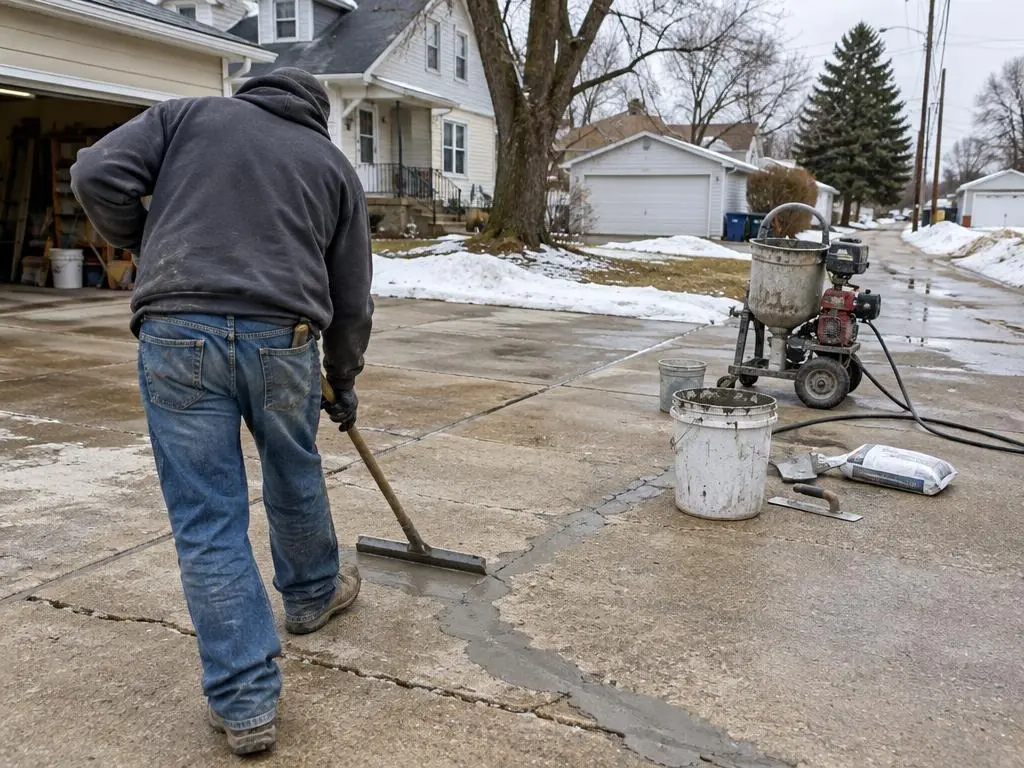
Shop & Commercial Floor Epoxy Questions
Can you coat a machine shed or pole barn floor?
Yes. We test for moisture first, since many outbuilding slabs have no vapor barrier, and plan extra texture near the big doors. Large floors can be done in sections.
Will epoxy hold up to forklifts and skid steers?
A properly installed 100% solids system handles rolling loads well. Steel tracks and chains still damage any coating, so we talk through what equipment runs on the floor before choosing a system.
How long does a shop floor have to be shut down?
It depends on size and system. With fast-cure topcoats and phased work, many shops lose only a few days. We write the schedule into the quote.
Can you coat a floor that has years of oil soaked in?
Usually. We degrease and grind, and treat or cut out the worst spots. If oil keeps coming back, we tell you before the coating goes down.
Shop & Commercial Floor Epoxy Service Areas
- Epoxy Flooring in Waterloo, IA
- Epoxy Flooring in Cedar Falls, IA
- Epoxy Flooring in Evansdale, IA
- Epoxy Flooring in Elk Run Heights, IA
- Epoxy Flooring in Raymond, IA
- Epoxy Flooring in Gilbertville, IA
- Epoxy Flooring in Hudson, IA
- Epoxy Flooring in La Porte City, IA
- Epoxy Flooring in Dunkerton, IA
- Epoxy Flooring in Waverly, IA
- Epoxy Flooring in Denver, IA
- Epoxy Flooring in Janesville, IA
- Epoxy Flooring in Dike, IA
- Epoxy Flooring in Parkersburg, IA
- Epoxy Flooring in New Hartford, IA
Get a Shop & Commercial Floor Epoxy Estimate
Free on-site estimates for shops, sheds and commercial floors in the Cedar Valley.